The Useful Shape of an Afternoon Out
Plan an afternoon out around a hands-on activity, the right local setting, and a simple preparation routine so you can focus on enjoying the day.
The most common mistake in planning an afternoon out is choosing a destination before deciding what you want to do there; the cost is arriving with no more than a view to fill the time. A more memorable afternoon out often starts with a small, hands-on pursuit: sketching harbor cranes, looking for tide pools from a safe path, or browsing for a particular kind of book. The activity gives your attention somewhere to land.
Choose an activity that makes you look closer
A good afternoon activity does not need special skill or a finished result. Pick something that changes how you notice a place: sketch the outlines of buildings, photograph contrasting roof colors, read the names on a trail’s plant signs, or keep a short list of birds you recognize.
Match the activity to the setting and the company. A quiet gallery suits slow looking; a sheltered waterfront can suit a pocket sketchbook; a public library is a welcome place to browse on a blustery day. If you are with someone else, choose something that leaves room to talk rather than demanding constant attention.
Keep the materials modest. A pencil and small notebook are easier to manage than a full art kit, while a phone camera can serve for reference images if photography is allowed. Check venue rules before bringing equipment or taking pictures.
Let the place shape the plan
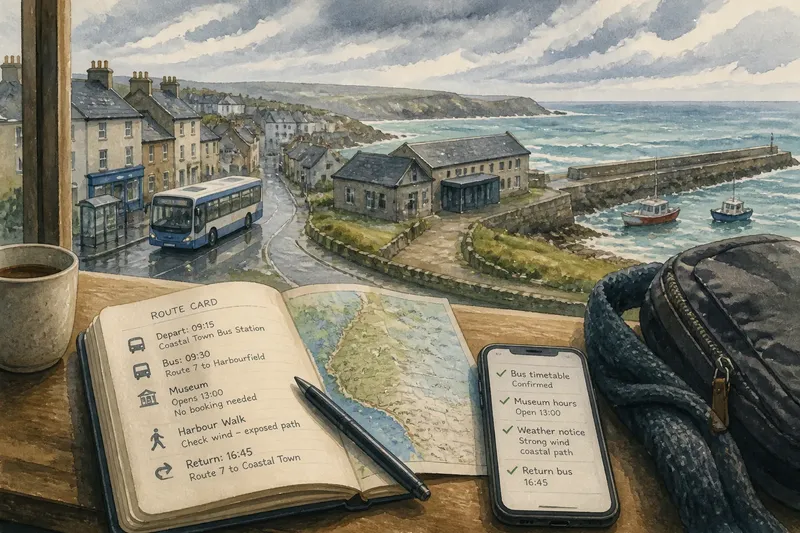
Northern weather and landscapes can change the feel of an outing quickly, so think about what the activity needs. Wind can make loose paper awkward; wet ground may rule out sitting on a blanket; low cloud can soften a distant view while making a covered arcade or greenhouse more appealing.
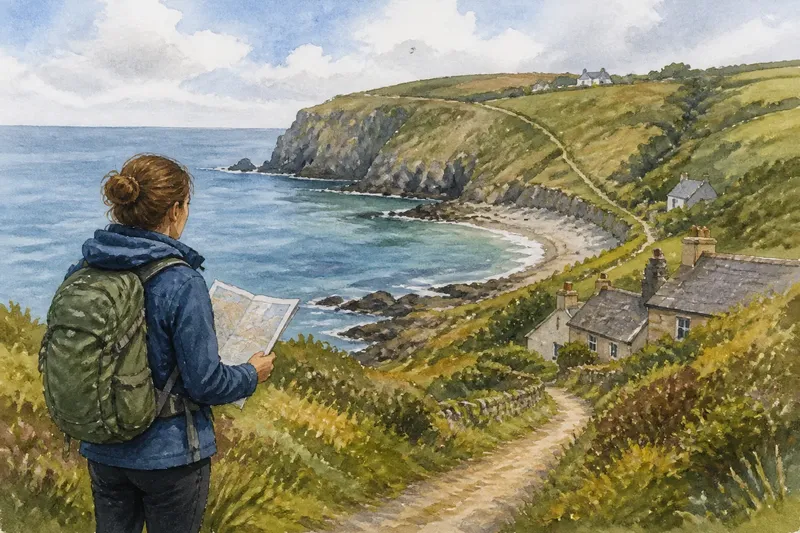
Choose a setting with a practical version of your activity. A coastal path with a sheltered stop may work for watching boats, while a local history room can offer details to draw or note when the shore is exposed to wind. Look for public access information, opening details, and any restrictions before you set out.
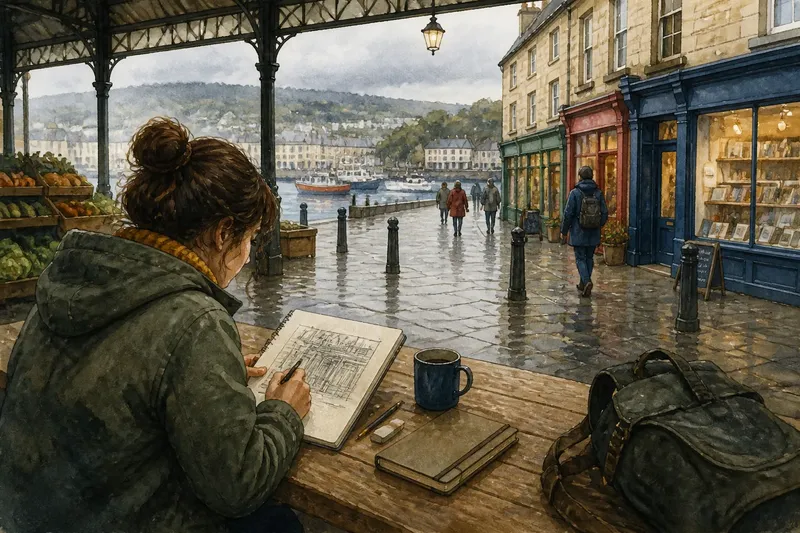
Say you want to sketch old shopfronts in a northern town, and your starting point is a pencil, a small notebook, and a forecast calling for showers. You check that the covered market is open and that drawing is permitted, then choose a seat under its roof and spend the visit noting door shapes and sign lettering. If the market is closed, your alternative is the nearby library’s local-history display; the resulting choice keeps the same subject without relying on dry weather.
Prepare for the activity, not every possibility
A few targeted checks can prevent the most likely interruptions. Use this list to decide what to bring or change:
- Check the surface where you plan to sit or stand. If it is exposed or damp, bring a waterproof layer or choose a covered spot instead.
- Check whether the venue allows your materials or activity. If sketching or photography is restricted, leave the equipment at home and choose a public outdoor location.
- Check the route for steps, uneven ground, and places to rest. If the approach does not suit someone in your group, choose an accessible alternative or a shorter visit.
- Check current opening and access information. If the doors are closed or entry is restricted, switch to a nearby public place rather than making the trip around that venue.
- Check whether your activity needs power or a quiet place. If a device needs charging or the setting is noisy, bring a charged device or choose a quieter indoor location.
- Check what the weather means for your materials. If wind or rain could spoil paper or equipment, use a pencil and hard-backed notebook or move the activity indoors.
Pack only what follows from those checks. A warm layer, water, and a notebook may be enough; specialist gear is useful only if the chosen activity genuinely calls for it.
Make the activity easy to begin
Starting can be the awkward part, especially if the activity is unfamiliar. Give yourself a simple first action: draw three rooflines, read one information panel, or spend a few minutes noticing how the light changes across a wall. Once your attention is engaged, the next choice tends to become clearer.
If you are going with a friend, agree on a loose way to participate. One person might sketch while the other reads signs, then compare notes over a drink. With children, offer a small prompt—find a doorway with an unusual color, for instance—rather than turning the outing into a scorecard.
What should you do if the plan changes?
What if the weather turns?
Move the same activity to a covered or indoor setting if one is available, or change to something that suits the conditions, such as reading local displays instead of sketching outdoors. If neither option feels comfortable, head home and save the activity for another day.
How can I make a solo outing feel less aimless?
Choose a small prompt before leaving, such as noticing painted signs or collecting ideas for a future drawing. It gives the visit a thread without requiring a route or a finished product.
What can we do if our interests differ?
Pick a place that supports parallel activities, such as a museum where one person reads exhibits and another makes notes or sketches. If the venue does not allow both, choose a shared activity that needs little equipment, like browsing a market together.
How do I know when the activity is complete?
Use a natural stopping point: finish the page, reach the end of a display, or leave when the place becomes uncomfortable. The activity has served its purpose once it has made the outing engaging, even if there is no polished result.
Keep the result small and useful
A note, a rough sketch, or a handful of observations can be enough to remember what caught your attention. You might jot down a street name to revisit, a color combination to use in a drawing, or a question to look up later.
For an afternoon out, choose an activity that fits the place and the conditions, then bring only what helps you begin. A modest prompt and a few thoughtful observations can turn an ordinary stop into a reason to look twice.