The Itinerary That Leaves No Time to Look Around
A flexible outing itinerary gives you a clear route and practical choices for changing weather, opening hours, and unexpected detours without rushing.
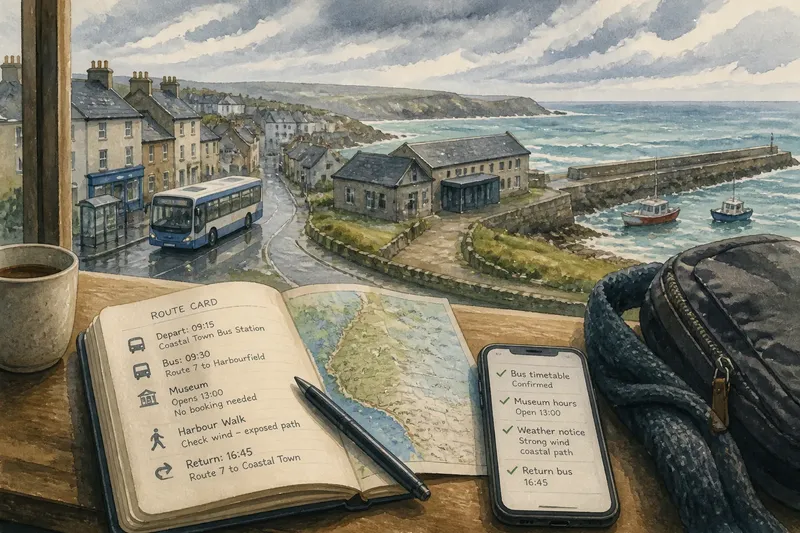
The common mistake in a flexible outing itinerary is treating every saved map pin as a promise. The cost is a day spent checking directions and arrival times instead of noticing the place you came to see. A better plan is a small route card: the details you need to travel, enter, and get home, without turning every possibility into a scheduled stop.
A flexible outing itinerary starts with practical constraints
Before choosing stops, check the facts that can make a plan workable or impossible: transit times, opening hours, booking requirements, access restrictions, and the route back. For a northern outing, daylight, ferry timetables, road conditions, and seasonal closures may matter as much as the destination itself.
Use the official operator or venue pages for current details, and save essential information where you can read it without a strong signal. Keep the address, ticket or reservation details, and return options together in a phone note or on paper.
Check the parts that could strand or exclude someone first; choose attractions afterward.
Turn essential details into a compact route card
Write down the departure point, the transport or driving route, any fixed-time booking, and the return plan. Add only the places that fit between those commitments without requiring guesswork about connections or access.
For each planned stop, note the detail that affects your decision: a posted closing time, whether entry needs a reservation, or where the path begins. A map pin alone cannot tell you whether a site is open or how to reach its entrance.
Keep optional ideas separate from the route card. That way, a saved bakery or viewpoint remains a possibility, not a missing item to chase.
Use a simple check before adding a stop
- Check whether the stop is open at the time you expect to arrive; if it is closed, remove it or choose another open place.
- Check whether a reservation or ticket is required; if you do not have one, confirm walk-in access or leave the stop off the route.
- Check the full transit connection, including the return; if the service does not line up, choose a reachable stop or change the travel plan.
- Check access details for anyone in the group; if the route or entrance does not suit them, contact the venue or select an accessible alternative.
- Check current local weather and any relevant site notices; if conditions make the outdoor stop unsuitable, use an appropriate indoor option or head home.
- Check whether the stop adds a separate journey rather than fitting the route; if it does, compare that detour with the time and effort available, then skip it or replace a planned stop.
Make decisions with the information you have
Say you are planning an invented day trip from a coastal town to a small museum and a harbor walk. Your starting information is a museum listing that says it opens in the afternoon, a bus timetable with a return service before evening, and a weather notice warning of strong wind along the exposed shore.
First, you check the bus operator’s current timetable and confirm that the return service is still listed. Next, you check the museum’s own page for its opening details and note that the bus arrives before the doors open. You then check the local notice for the harbor path and see that the exposed section may be unpleasant in the wind.
The resulting route is to take the bus, visit the museum when it opens, and keep the harbor walk as a choice only if conditions feel suitable on arrival. If the path is not appealing or a notice closes it, you stay near the museum and take the confirmed return bus; the tradeoff is missing the shoreline walk rather than risking a rushed or unsuitable detour.
What should you check before leaving?
How do I confirm a place is open?
Check the venue’s own website or contact details, especially if its hours change by season or day. If the information is unclear, call or choose a stop whose access you can confirm.
What should I save for an outing with weak cell service?
Save the route, addresses, booking details, transit schedule, and any access instructions offline or on paper. If a connection fails, those notes help you follow the plan or identify a sensible return option.
How can I plan around uncertain weather?
Check current local forecasts and official site notices, then identify a nearby indoor alternative only if it is open and accessible. If conditions become unsafe or uncomfortable, change the plan rather than treating the original route as an obligation.
What if a connection or venue detail changes?
Use the operator or venue’s current notice to decide whether the stop remains practical. If it does not, remove it and follow a confirmed alternative, such as another service or an earlier return.
Leave room for a useful change of plan
A route card should make the next decision easier, not dictate every minute. If a ferry is delayed, a path is closed, or a venue’s hours differ from the listing, check the relevant operator or site notice before deciding what to do next.
For a flexible outing itinerary, keep the essentials—how to get there, what must be confirmed, and how to return—easy to find. The most useful final check is that everyone knows the fallback plan and where to look for current information.